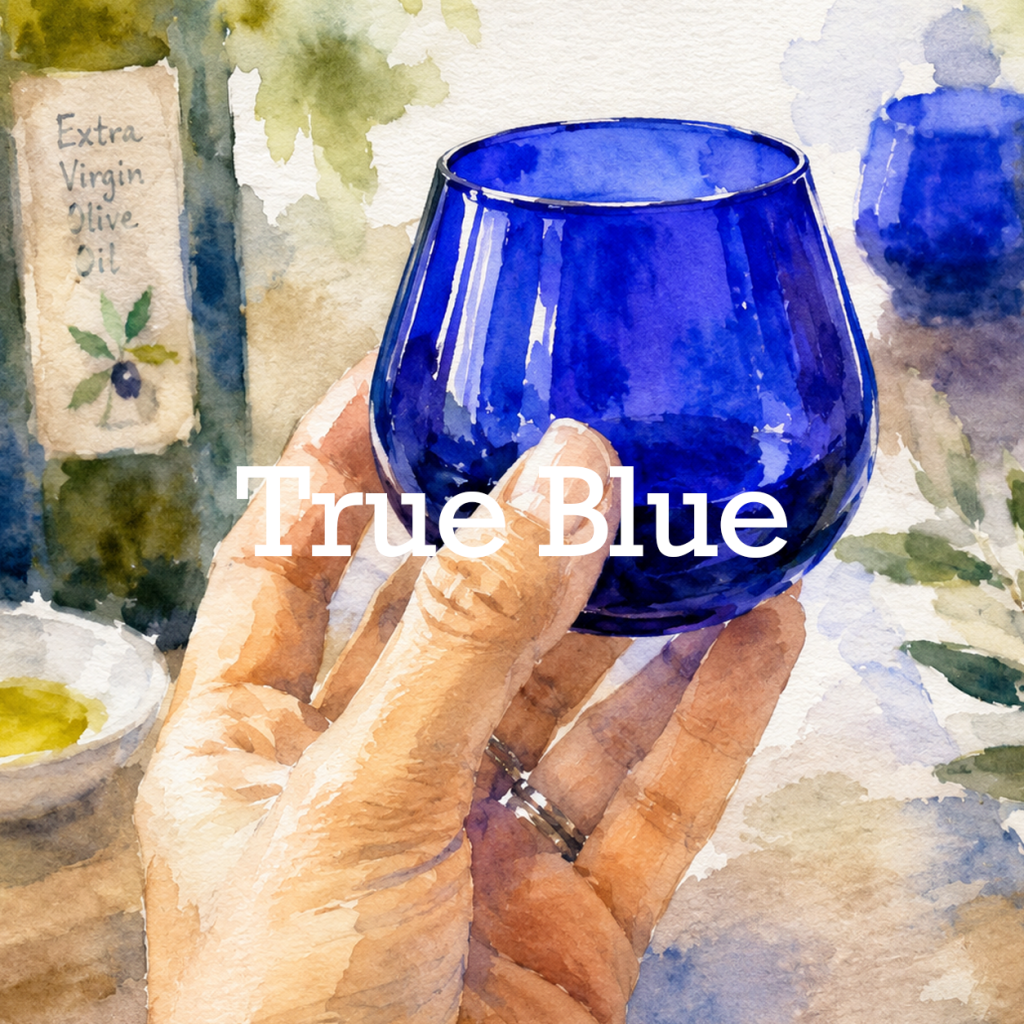
Every olive oil tasting I teach begins the same way.
Someone picks up the little blue glass and asks:
“Why is it blue?”
The short answer?
So your eyes don’t get a vote.
Most of us have been taught that green olive oil must be better olive oil. The deeper the green, the fresher, healthier, and more flavorful it must be.
Except that’s not necessarily true.
Some exceptional extra virgin olive oils are bright green. Others are golden yellow. Color is influenced by olive variety, ripeness, climate, and harvest conditions—not quality.
But our brains love shortcuts.
Show two identical oils side by side—one emerald green and one golden—and most people will already have decided which one they think tastes better before they’ve even lifted the glass.
Professional tasters know this. That’s why official olive oil tasting glasses are cobalt blue. The dark glass hides the color so the oil can be judged on what actually matters:
- Fruitiness
- Freshness
- Bitterness
- Pungency
- Balance
- Aroma
In other words, what’s happening in the glass—not what it looks like.
I love that there is a bigger lesson hidden inside those little blue cups.
So much of life is spent making snap judgments. We do it with food. We do it with people. We do it with places, experiences, and opportunities.
The blue glass asks us to slow down.
To be curious.
To pay attention.
To experience something before deciding what we think about it.
And honestly, that’s what I love most about olive oil tasting.
It’s never really just about olive oil.
It’s about learning to notice.
So the next time you see one of those funny little blue cups, you’ll know they’re not there to make things fancy.
They’re there to make things fair.
And sometimes, the best discoveries happen when we stop looking and start tasting.
🫒💙
 The Olive Oil Gal • Hilton Head Island, SC
Leave a comment