Category: Uncategorized

  • The Smell of Summer

    Today marks fifteen years since my dad passed away.

    Some anniversaries have a way of bringing everything back, no matter how much time has passed. Memories surfaced throughout the day, and I found myself thinking about him more than usual.

    So I decided to make one of his favorite meals.
    Sausage and peppers.

    Every summer, our extended family rented houses in Seaside Heights, New Jersey. My aunts, uncles, cousins—we were all there together, creating the kinds of memories that only seem to happen at the Jersey Shore.

    And every Wednesday night—without fail—was boardwalk night.

    It wasn’t a question. It wasn’t something we planned. It was simply our tradition.

    We’d wander the boardwalk, play games, ride endless rides, watch the fireworks, and soak up everything that made those summer vacations so special.

    But for my dad, there was one stop that always came first.

    A sausage and peppers sandwich.

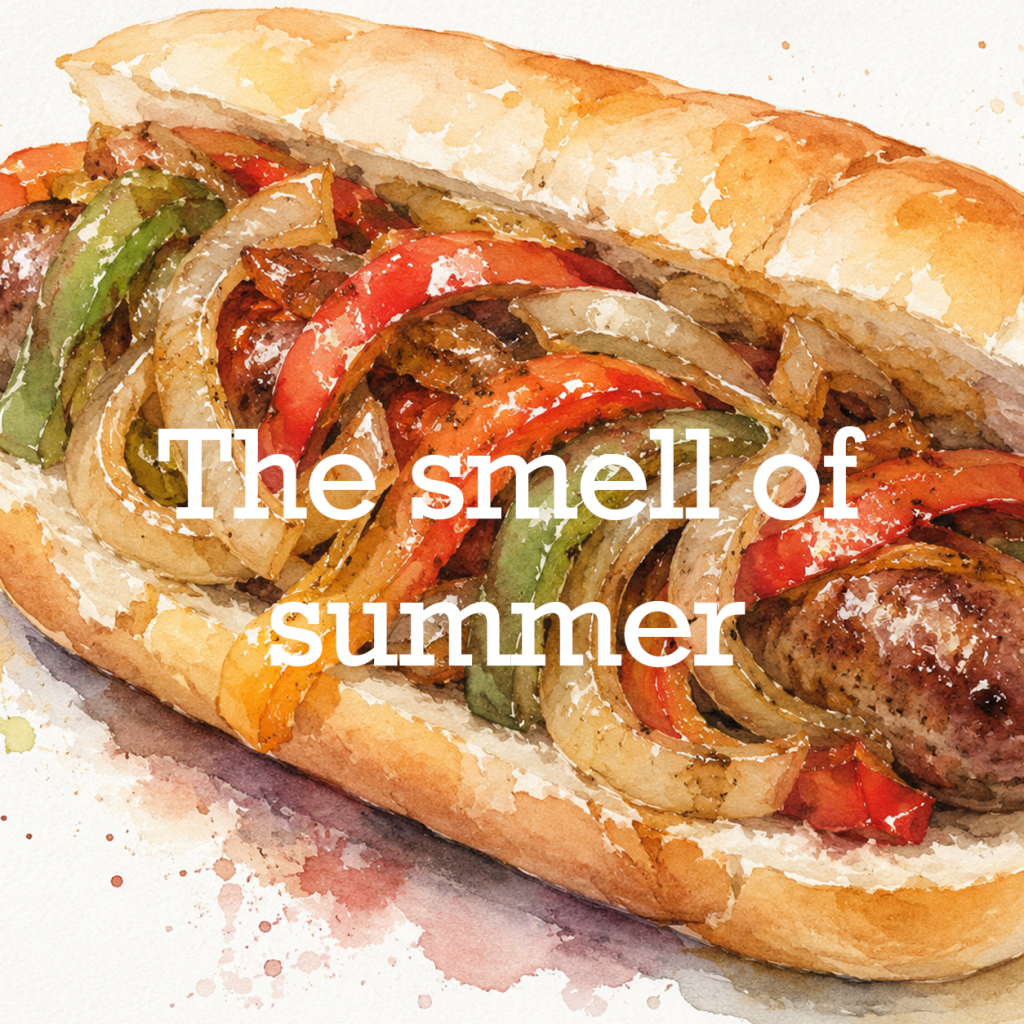
    The smell of onions caramelizing on a hot griddle. Sweet peppers sizzling beside them. Italian sausage browning until the edges were just right. Tucked into a warm roll and eaten with a stack of napkins because there was no neat way to enjoy it.

    To me, that smell wasn’t just dinner.

    It was summer.

    Tonight, I stood in my kitchen, ready to recreate one of my dad’s favorite meals.

    I sliced the peppers. I peeled the onions. I reached for the sausage…

    …and realized I’d forgotten to buy it.

    I laughed out loud.

    After all these years, I could almost hear my dad teasing me.

    “Suzanne…you forgot the sausage?”

    There was no way I was driving back to the store.

    So I improvised.

    I browned ground turkey with onions and peppers, added a generous drizzle of Pizzaiola Olive Oil, and a pinch of fennel seed—that unmistakable flavor that makes Italian sausage taste like Italian sausage. Then I spooned it all over creamy polenta.

    Was it the same sandwich my dad devoured every Wednesday night on the Seaside Heights boardwalk?

    Not even close.

    But as the onions softened, the peppers caramelized, and the aroma of garlic, herbs, and fennel filled my kitchen, something unexpected happened.

    For a few moments, I wasn’t standing in my condo on Hilton Head Island.

    I was back on that boardwalk.

    I could almost hear the laughter of my cousins, the clanging arcade games, the distant roar of the rides, and see my dad happily enjoying the first sausage and peppers of the week.

    That’s the remarkable thing about food.

    Sometimes it isn’t the recipe that brings us back.

    It’s the smell.

    The memory.

    The people we shared it with.

    I’ve spent the last few years teaching people about olive oil—how it can transform a dish, elevate a recipe, and bring people together around a table.

    But tonight, it reminded me of something even more important.

    Food carries our stories.

    It preserves our traditions.

    It keeps the people we love close, long after they’re gone.

    Sometimes all it takes is the smell of onions and peppers in a skillet to remember exactly where you came from… and exactly who taught you to love good food.

    Tonight, dinner wasn’t really about sausage and peppers.

    It was about my dad.

    And somehow, even without the sausage, it was exactly the meal I needed.

    What food instantly takes you back to someone you love?

    I’d love to hear your story.

    — Suzanne

  • Things Customers Say in the Tasting Room

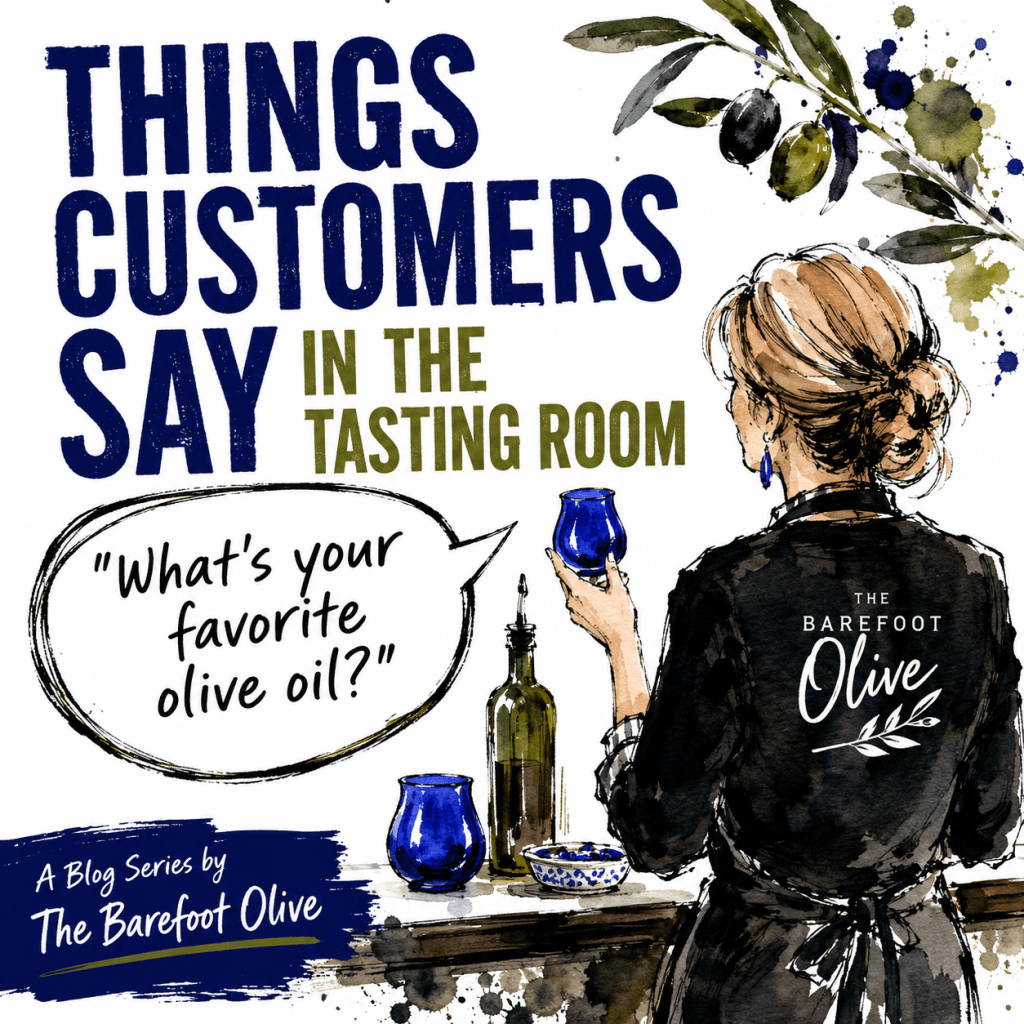
    Episode 1: What’s Your Favorite Olive Oil?

    “What’s your favorite olive oil?”

    I hear that question almost every day, and honestly, it’s one of the hardest questions for me to answer.

    Not because I don’t have favorites. I do.

    The problem is that my favorite olive oil depends entirely on what I’m eating, what I’m cooking, and sometimes even what kind of mood I’m in.

    A robust, peppery olive oil might be perfect on a grilled steak or a bowl of white beans. But that same oil could overpower a delicate piece of fish or a simple summer salad.

    It’s a little like asking someone, “What’s your favorite wine?” Are we talking about a summer picnic, a holiday dinner, or pizza night on the porch?

    As an olive oil sommelier, I taste oils the way wine professionals taste wine. Some are delicate and buttery. Some are grassy and herbaceous. Others are bold, peppery, and downright feisty.

    There isn’t one “best” olive oil.

    There is only the best olive oil for you.

    That’s why I always encourage customers to taste before they buy whenever possible. What tastes amazing to me may not be the flavor profile you enjoy. And that’s perfectly okay.

    One of the things I love most about olive oil is that there is something for everyone. Some people fall in love with a mild Arbequina. Others want the peppery kick of a robust Coratina that makes them cough a little.

    So the next time you’re tempted to ask me what my favorite olive oil is, try asking a different question:

    “What olive oil do you think I would like?”

    Now we’re having a much more interesting conversation.

    — Suzanne Brown
    The Olive Oil Gal

  • The Heat is Winning

    It’s that time of year in the Lowcountry when stepping outside feels like opening the door to an oven.

    The air is thick. The sidewalks shimmer. Even the dog looks offended.

    By mid-afternoon, I find myself moving slower, thinking slower, and wondering why I ever thought running errands at 2:00 p.m. was a good idea. The heat doesn’t just make us uncomfortable—it drains us. It steals our energy, shortens our patience, and sends us searching for shade, air conditioning, and something cold to drink.

    As much as the summer heat can wear us down, it turns out your extra virgin olive oil feels much the same way.

    Heat Is the Enemy

    Extra virgin olive oil is essentially fresh fruit juice. Unlike highly processed oils, it contains delicate antioxidants, polyphenols, and flavor compounds that make it both delicious and healthy.

    Those compounds are surprisingly fragile.

    Heat, light, and oxygen are the three biggest enemies of olive oil, and summer delivers all three in abundance.

    When olive oil is exposed to excessive heat, it begins to oxidize more quickly. The fresh grassy, peppery, and fruity flavors fade. The antioxidants that contribute to olive oil’s health benefits begin to break down. Over time, the oil becomes flat, dull, and eventually rancid.

    Think of it this way:

    The same heat that leaves us wilted after an afternoon in the sun is slowly doing the same thing to your olive oil.

    The Kitchen Counter Isn’t Always Its Friend

    One of the most common questions I hear is:

    “Where should I store my olive oil?”

    The answer is simple:

    Cool. Dark. Dry.

    That beautiful bottle sitting in direct sunlight beside the stove may look lovely, but it’s one of the worst places for olive oil. Between the heat from cooking and exposure to light, the oil ages far more quickly than it should.

    A pantry, cabinet, or cupboard away from appliances is a much better choice.

    Summer Survival Tips for Your EVOO

    A few simple habits can help preserve both flavor and freshness:

    • Store olive oil away from windows and direct sunlight.

    • Keep bottles away from the stove, oven, and dishwasher.

    • Always replace the cap after use.

    • Buy quantities you’ll use within a few months.

    • Don’t leave olive oil in a hot car. (This one happens more often than you’d think.)

    A Mediterranean Lesson

    One of the things I love about Mediterranean cultures is that they understand how to live with the heat rather than fight it.

    Meals become simpler.

    Tomatoes, peaches, herbs, and fresh bread take center stage.

    Cooking becomes lighter.

    Olive oil becomes the star.

    When the temperatures climb, I find myself reaching for the same things: a tomato salad, grilled vegetables, a piece of crusty bread, and a generous pour of good extra virgin olive oil.

    Maybe that’s the lesson summer is trying to teach us.

    Slow down.

    Keep things simple.

    Stay out of the heat when you can.

    And take care of the things that matter—including your olive oil.

  • The Curious Case of the Blue Olive Oil Cup

    Every olive oil tasting I teach begins the same way.

    Someone picks up the little blue glass and asks:

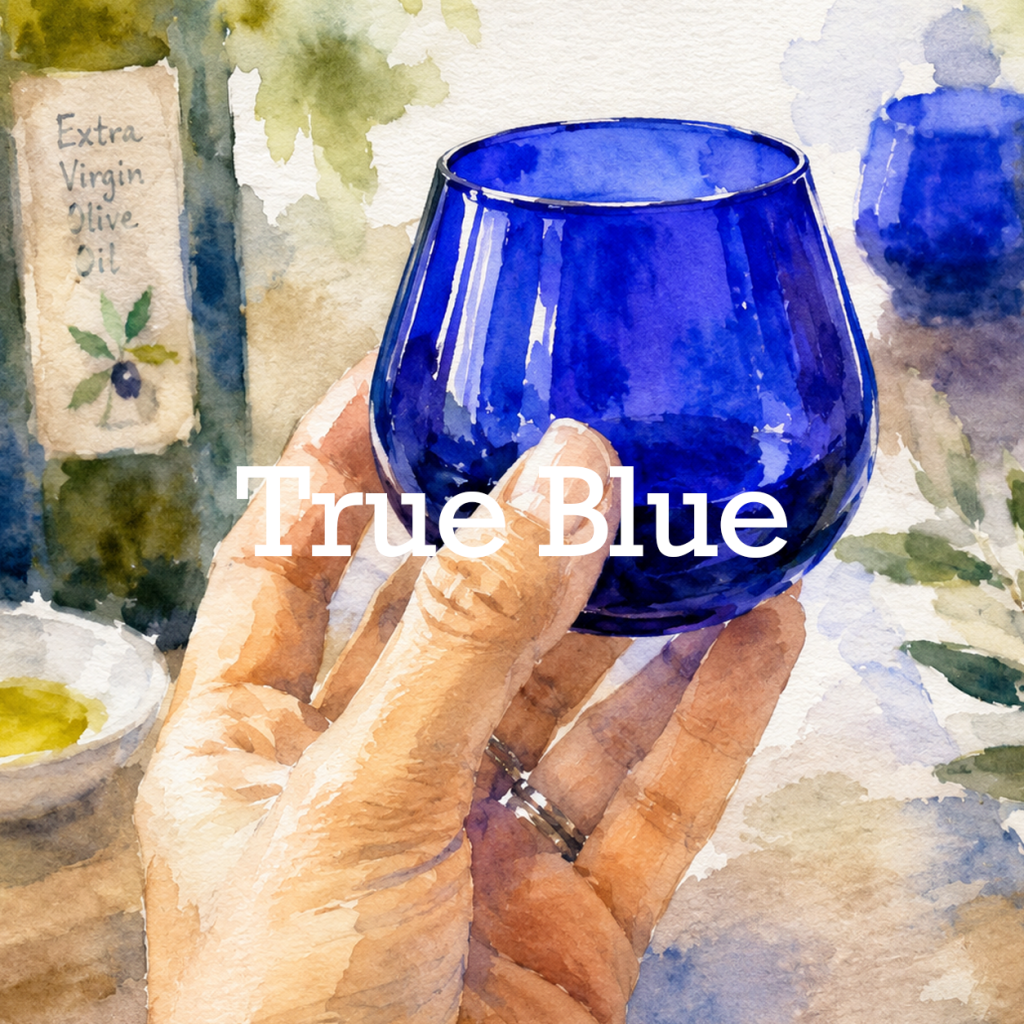
    “Why is it blue?”

    The short answer?

    So your eyes don’t get a vote.

    Most of us have been taught that green olive oil must be better olive oil. The deeper the green, the fresher, healthier, and more flavorful it must be.

    Except that’s not necessarily true.

    Some exceptional extra virgin olive oils are bright green. Others are golden yellow. Color is influenced by olive variety, ripeness, climate, and harvest conditions—not quality.

    But our brains love shortcuts.

    Show two identical oils side by side—one emerald green and one golden—and most people will already have decided which one they think tastes better before they’ve even lifted the glass.

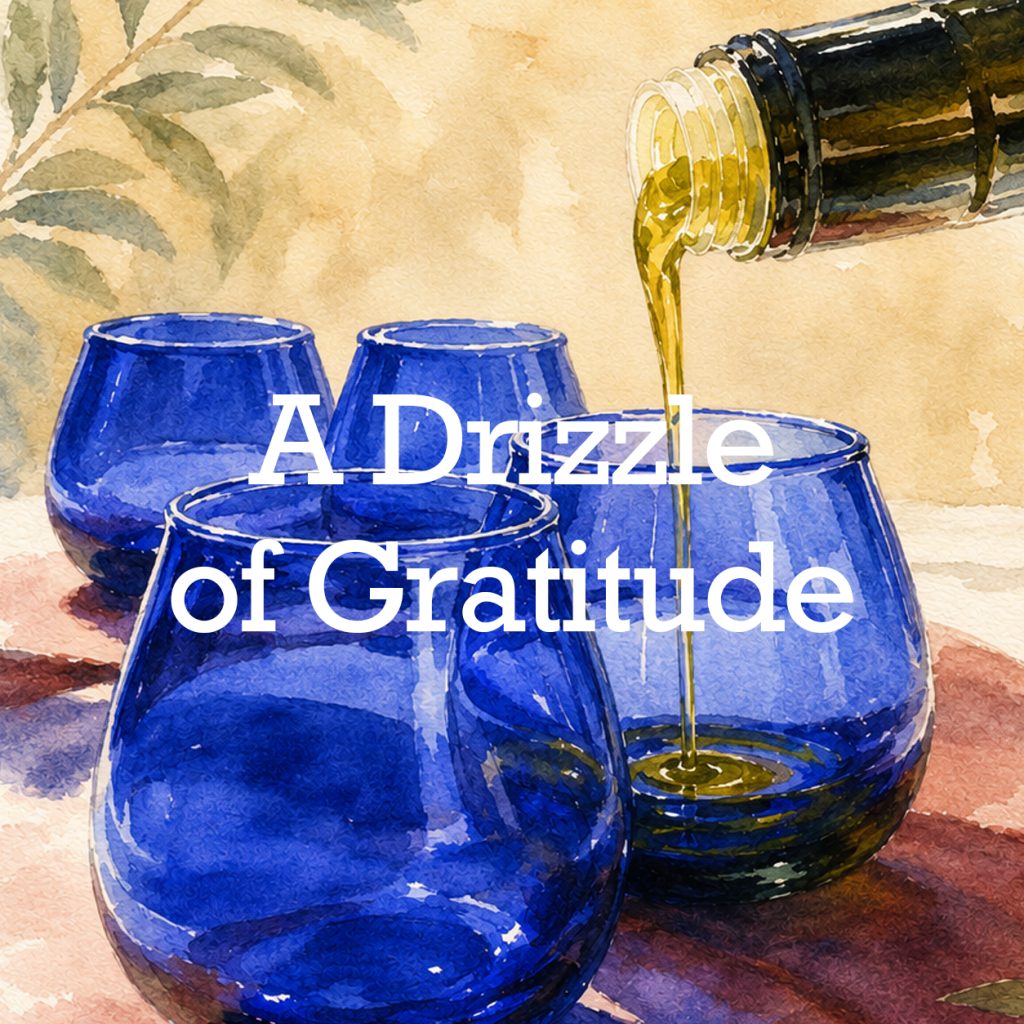
    Professional tasters know this. That’s why official olive oil tasting glasses are cobalt blue. The dark glass hides the color so the oil can be judged on what actually matters:

    • Fruitiness
    • Freshness
    • Bitterness
    • Pungency
    • Balance
    • Aroma

    In other words, what’s happening in the glass—not what it looks like.

    I love that there is a bigger lesson hidden inside those little blue cups.

    So much of life is spent making snap judgments. We do it with food. We do it with people. We do it with places, experiences, and opportunities.

    The blue glass asks us to slow down.

    To be curious.

    To pay attention.

    To experience something before deciding what we think about it.

    And honestly, that’s what I love most about olive oil tasting.

    It’s never really just about olive oil.

    It’s about learning to notice.

    So the next time you see one of those funny little blue cups, you’ll know they’re not there to make things fancy.

    They’re there to make things fair.

    And sometimes, the best discoveries happen when we stop looking and start tasting.

    🫒💙

  • Bringing People Together, One Table at a Time

    There’s a quiet kind of magic that happens when people gather around a table. Not a fancy table. Not a perfect one. Just a table—maybe a little crowded, maybe mismatched chairs, maybe a loaf of bread torn by hand instead of sliced neatly. The kind of table where stories spill as easily as olive oil and no one is counting minutes.

    Food has always been our oldest invitation.

    Before reservations and tasting menus, before trends and timelines, we gathered to eat because we needed one another. To share. To pause. To belong. A table was never just about nourishment—it was about connection. About listening. About leaning in.

    Olive oil, in particular, carries this tradition beautifully. It’s humble and generous. It doesn’t demand attention, but it rewards it. A drizzle on warm bread becomes an opening line. A splash in a salad becomes a conversation starter. A tasting becomes an excuse to slow down and notice something together.

    I see it every time people come into a tasting or a class. Strangers arrive politely distant, arms crossed, phones tucked close. Then a bottle is opened. Someone coughs at the peppery finish. Someone else laughs. “Is it supposed to do that?” And suddenly the room softens. Questions follow. Opinions form. Memories surface—of a grandmother’s kitchen, a trip to Italy, a meal that lingered longer than expected.

    That’s the moment people start to gather—not just physically, but emotionally.

    Bringing people together doesn’t require perfection. It requires intention. A willingness to open a door, pour a little something, and say, “Try this.” Food does the rest. It gives people permission to talk. To disagree kindly. To share something real.

    In a world that often feels rushed and divided, the act of gathering has become quietly radical. Sitting down together—without an agenda, without a screen between us—is a small rebellion against speed and isolation. It reminds us that we are more alike than different. That bitterness and pungency, like in a good olive oil, are not flaws—they’re part of what gives depth and character.

    When people gather around food, walls come down. Conversations drift from recipes to life. From what’s for dinner to what really matters. You can feel the shift in the room—the way laughter gets easier, shoulders drop, time stretches.

    You don’t need a special occasion to bring people together. A Tuesday night works just fine. A simple salad, a good olive oil, a bottle passed hand to hand.

    Pull up another chair. Tear the bread. Drizzle generously.

    The table has always been waiting.

    Suzanne, The Olive Oil Gal

  • Every Olive Tells a Story: Understanding EVOO Cultivars

    Most people know that Chardonnay doesn’t taste like a Cabernet.
    Different grapes, different flavors, different personalities — that’s the magic of wine.

    But olive oil works the very same way.

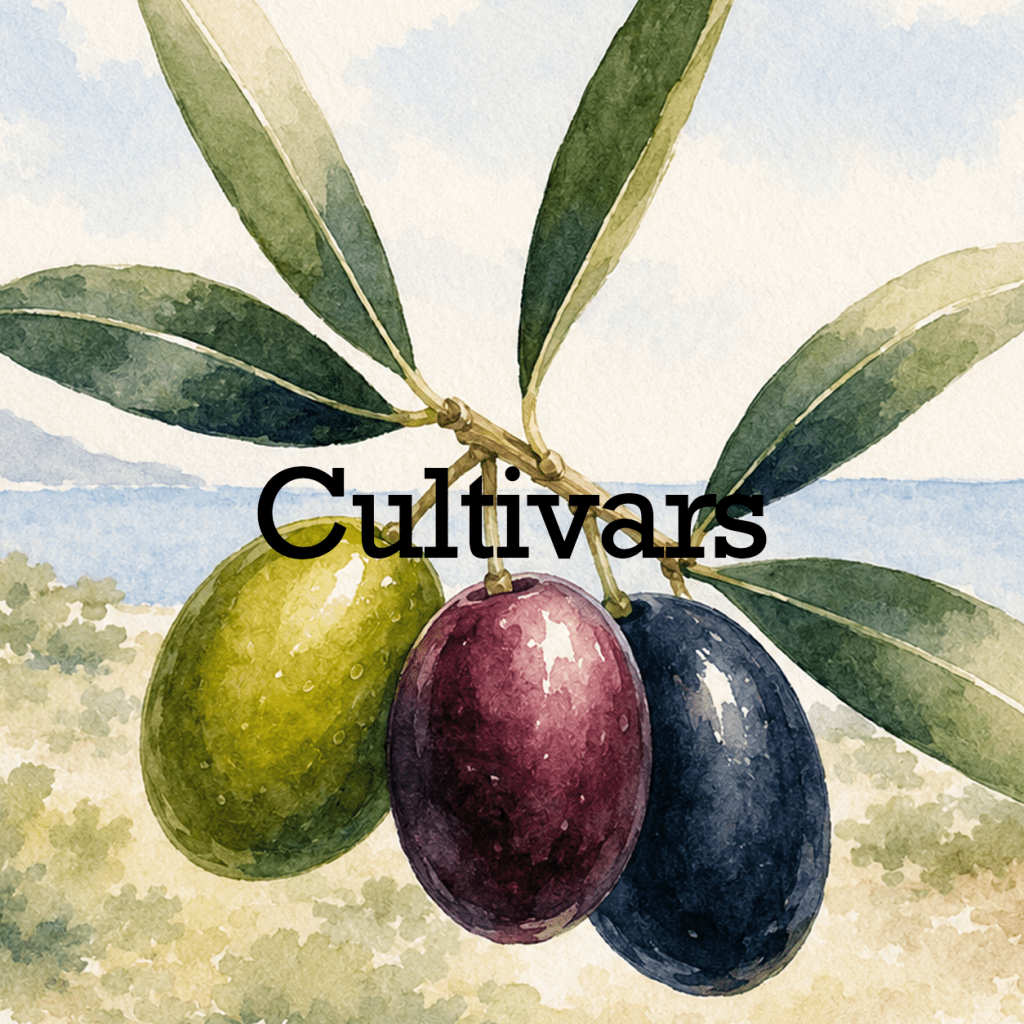
    Olives aren’t interchangeable. Every bottle of real extra virgin olive oil begins with a cultivar — a specific olive variety — and each one has its own character shaped by climate, soil, and harvest. Once you learn to taste EVOO by cultivar, the whole world of flavor opens up.


    Cultivar = Personality

    Just like grapes, different olives are genetically different. That’s why some oils taste tender and buttery, and others are peppery enough to make you cough — in the best way.

    A cultivar determines:

    • Intensity
    • Fruitiness
    • Bitterness
    • Peppery pungency
    • Polyphenol levels
    • Best culinary pairings

    There is no “best” olive. Only the one that fits the moment — the recipe, the mood, the season, the cravings.


    A Few Cultivars You May Already Know

    Koroneiki (Greece)

    Small fruit, mighty flavor.
    Bold • Herbaceous • Peppery finish
    A favorite for people who love a “three-cough” olive oil.
    Perfect with Greek salad, tomatoes, lentils, grilled vegetables, lamb.

    Picual (Spain)

    Green and complex.
    Tomato leaf • Artichoke • Slight heat
    One of the highest in natural antioxidants.
    Incredible with bread, potatoes, roasted vegetables, and sautéed greens.

    Coratina (Italy)

    The powerhouse of intensity.
    Bitter almond • Arugula • Black pepper
    A gorgeous choice for adventurous palates.
    Stands up to steaks, pizza, winter soups, aged cheeses.

    Arbequina (Spain)

    Soft and welcoming.
    Buttery • Mild • Fruity
    Gentle enough for beginners, beloved by everyone.
    Perfect for eggs, seafood, mashed potatoes, baking.

    With just these four oils in a kitchen, a home cook can transform their food all year long.


    The Harvest Layer

    Just as wine changes with each vintage, real EVOO changes with each harvest.

    Early harvest = more polyphenols, more bitterness, more pepper.
    Later harvest = softer, fruitier, more mellow.
    Rainfall, heat, soil, and timing all matter.

    So when you fall in love with a cultivar in a particular season, enjoy it now — next year it will be the same olive, but a brand-new expression of it.


    How to Taste Like a Pro

    Next time you’re sampling EVOO:

    1. Try two cultivars side by side.
    2. Smell first — notice what memories or aromas show up.
    3. Sip without bread to experience the true flavor.
    4. Notice the “big three”: fruitiness • bitterness • peppery finish.
    5. Then taste with food — this is where pairings shine.

    You may discover Koroneiki is your go-to for hearty dishes,
    Arbequina for comfort food,
    Picual for vegetables,
    and Coratina when life calls for something bold.


    The Takeaway

    Once you understand cultivars, olive oil stops being a pantry item and becomes an experience.

    You’ll begin to choose oils not by color of the bottle, but by:

    • the origin
    • the cultivar
    • the harvest
    • the flavor personality

    And cooking becomes more joyful, more intuitive, more delicious.

    Every olive has a story — and the best way to hear it is in every drizzle, every dish, every meal shared around the table.

  • A Drizzle of Gratitude

    Every November, we’re reminded to slow down, gather, and give thanks. And while Thanksgiving looks a little different for everyone — big families, small tables, Friendsgiving, beach picnics, or even a quiet dinner for one — the heart of it is always the same:

    we show love by feeding each other.

    In the olive oil world, we talk constantly about health, polyphenols, flavor profiles, harvest seasons, and regions — and yes, all of that matters. But lately I’ve been thinking about something simpler:

    ✨ Olive oil is really an act of generosity.
    We press a fruit, bottle the best of it, and share it — not because we have to eat, but because we want the people we love to enjoy something beautiful.

    Maybe that’s why drizzling olive oil over warm bread or tossing a salad for the table feels so much like a love language.

    This Thanksgiving, I’m grateful for:
    • the comfort of meals shared with the people who make life sweeter
    • the magic of recipes passed down, rewritten, and reinvented
    • the familiar clink of dishes, laughter in the kitchen, and “just a little more”
    • farmers and producers who pour their hearts into every harvest
    • and you — the community that reminds me every day why food matters

    No matter what you’re serving this week — turkey, tofurkey, lasagna, oysters, or takeout (no judgment here!) — I hope your table is filled with warmth, connection, and something delicious.

    And if a beautiful drizzle of olive oil happens to make its way across your plate?
    Even better. 💛

    Happy Thanksgiving from my table to yours.

    — Suzanne, The Olive Oil Gal

  • Pungency: The Bold One in the Room

    If fruitiness is the soul of olive oil, and bitterness its backbone, then pungency is the spark—the wild card, the unexpected friend who barges in with boldness and refuses to be ignored.

    Pungency shows up as that peppery kick in the back of your throat, the fiery tickle that makes you cough once, twice, maybe even three times. Tasters call them “one-cough, two-cough, three-cough oils,” and they’re a badge of honor, proof that the oil is fresh, vibrant, and brimming with health-giving polyphenols.

    At first, pungency can feel like too much. It’s intense, abrupt, even overwhelming—like meeting someone new who speaks a little too loudly or laughs a little too hard. But give it a chance, and suddenly you realize: this is the spark you didn’t know you needed. The one who wakes you up, brings energy to the room, and makes the experience unforgettable.

    Without pungency, olive oil would be flat, missing its fire. With it, the oil feels alive—balanced, bold, and complete. That cough isn’t a flaw; it’s a feature. It’s nature’s way of saying: this oil is working, this oil is real.

    In life, too, pungency teaches us that first impressions aren’t always the final story. Sometimes the things—or people—that challenge us at the start end up becoming the ones we value most. The spark becomes the anchor, the jolt becomes the joy.

    So the next time an olive oil makes you cough, don’t shy away. Smile, and welcome it. That fiery finish isn’t just flavor—it’s friendship. It’s the reminder that what startles us today may one day become the part of life we can’t imagine living without.

    Suzanne, The Olive Oil Gal

  • Bitterness, Reconsidered

    We spend so much of life avoiding bitterness. In food, in memories, in relationships—we equate bitter with unpleasant, something to be pushed aside. But in the world of olive oil, bitterness is not something to fear. It’s something to savor, even to learn from.

    Olives are born bitter. You can’t pluck one off the tree and eat it—it will make you pucker and spit. Yet from that bitterness comes one of the world’s greatest gifts: extra virgin olive oil. Pressed and pure, it carries with it a depth of flavor that is proof of its vitality.

    That sharp, green, almost biting taste on your tongue? It’s the polyphenols—the antioxidants that protect both the fruit and us. They are nature’s signpost of strength. The more bitter the oil, the more alive it is, the more protective it becomes.

    I often think of bitterness as a teacher. Just as oil without bitterness tastes flat, life without its own difficult edges would be shallow. It is often the moments we resist—the sharp conversations, the disappointments, the losses—that end up giving us resilience, balance, and appreciation for sweetness when it comes.

    In an olive oil tasting, I encourage people not to shy away from the bitterness. Instead, lean in. Notice the way it reveals layers of green almond, artichoke leaf, even dandelion greens. Let it linger. Let it open you to complexity.

    Bitterness reminds us that not everything meant for us will feel easy at first. Often, the flavors we resist are the very ones that nourish us most deeply.

    So the next time you taste a bold, bitter oil, remember: it’s more than flavor—it’s a philosophy. Olive oil shows us that bitterness isn’t an ending, but a beginning—the first step toward depth, strength, and balance.

    Suzanne, The Olive Oil Gal

  • The Beauty of Fruity

    When most people hear the word fruity, they think of apples, citrus, or maybe a bowl of berries. But in the world of extra virgin olive oil, fruitiness has a very different—and very special—meaning.

    Olive oil is, at its heart, a fruit juice. Pressed from fresh olives, it captures the essence of the fruit itself. When we talk about fruitiness in olive oil, we’re describing the aromas and flavors that remind us the oil came directly from a living, breathing fruit tree.

    Some oils are grassy and green, with hints of artichoke, tomato leaf, or fresh-cut herbs. Others lean toward ripe fruit, with softer notes of apple, banana, or stone fruit. A truly well-made oil often balances both—the vibrant “green” freshness and the mellow “ripe” sweetness—making the tasting experience layered and alive.

    When I lead tastings, I always ask people to smell first, taste second. The fruitiness hits your nose before your tongue: it’s the fragrance that rises when you warm the glass in your hands, the first impression that sets the stage for bitterness and pungency to follow.

    Fruitiness isn’t about sugar or sweetness. It’s about vibrancy. It’s the quality that makes an oil feel fresh, youthful, and bursting with life. Without fruitiness, an olive oil feels flat and lifeless. With it, the oil comes alive—transforming a simple drizzle over greens, grains, or grilled fish into something remarkable.

    I often say: bitterness and pungency show you an oil’s strength, but fruitiness shows you its soul.

    So the next time you swirl a spoonful of extra virgin olive oil, close your eyes and breathe in. What fruitiness do you find there? Green tomato? Almond? Apple peel? Each whisper tells the story of the olive’s journey—from grove to press to bottle to your table.

    Suzanne, The Olive Oil Gal