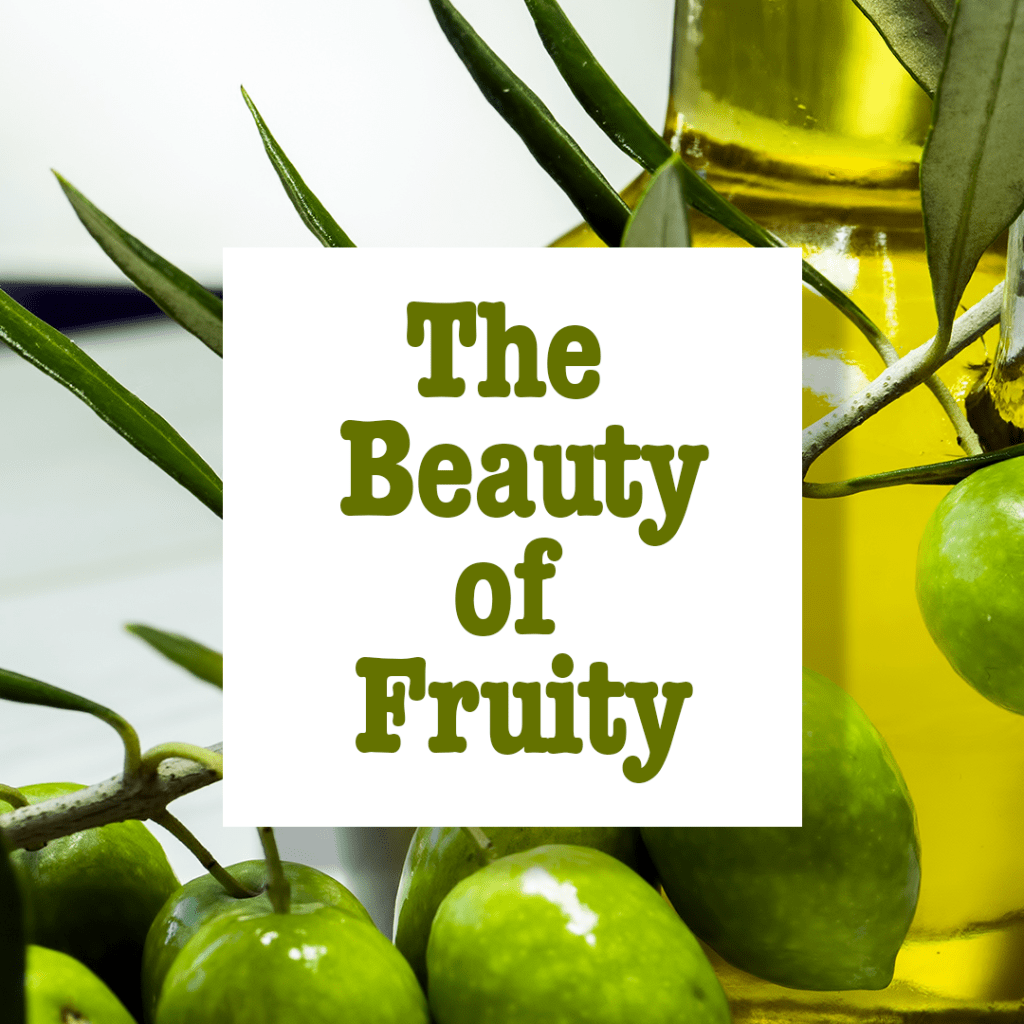
When most people hear the word fruity, they think of apples, citrus, or maybe a bowl of berries. But in the world of extra virgin olive oil, fruitiness has a very different—and very special—meaning.
Olive oil is, at its heart, a fruit juice. Pressed from fresh olives, it captures the essence of the fruit itself. When we talk about fruitiness in olive oil, we’re describing the aromas and flavors that remind us the oil came directly from a living, breathing fruit tree.
Some oils are grassy and green, with hints of artichoke, tomato leaf, or fresh-cut herbs. Others lean toward ripe fruit, with softer notes of apple, banana, or stone fruit. A truly well-made oil often balances both—the vibrant “green” freshness and the mellow “ripe” sweetness—making the tasting experience layered and alive.
When I lead tastings, I always ask people to smell first, taste second. The fruitiness hits your nose before your tongue: it’s the fragrance that rises when you warm the glass in your hands, the first impression that sets the stage for bitterness and pungency to follow.
Fruitiness isn’t about sugar or sweetness. It’s about vibrancy. It’s the quality that makes an oil feel fresh, youthful, and bursting with life. Without fruitiness, an olive oil feels flat and lifeless. With it, the oil comes alive—transforming a simple drizzle over greens, grains, or grilled fish into something remarkable.
I often say: bitterness and pungency show you an oil’s strength, but fruitiness shows you its soul.
So the next time you swirl a spoonful of extra virgin olive oil, close your eyes and breathe in. What fruitiness do you find there? Green tomato? Almond? Apple peel? Each whisper tells the story of the olive’s journey—from grove to press to bottle to your table.
Suzanne, The Olive Oil Gal
 Diary of an Olive Oil Somellier
Leave a comment